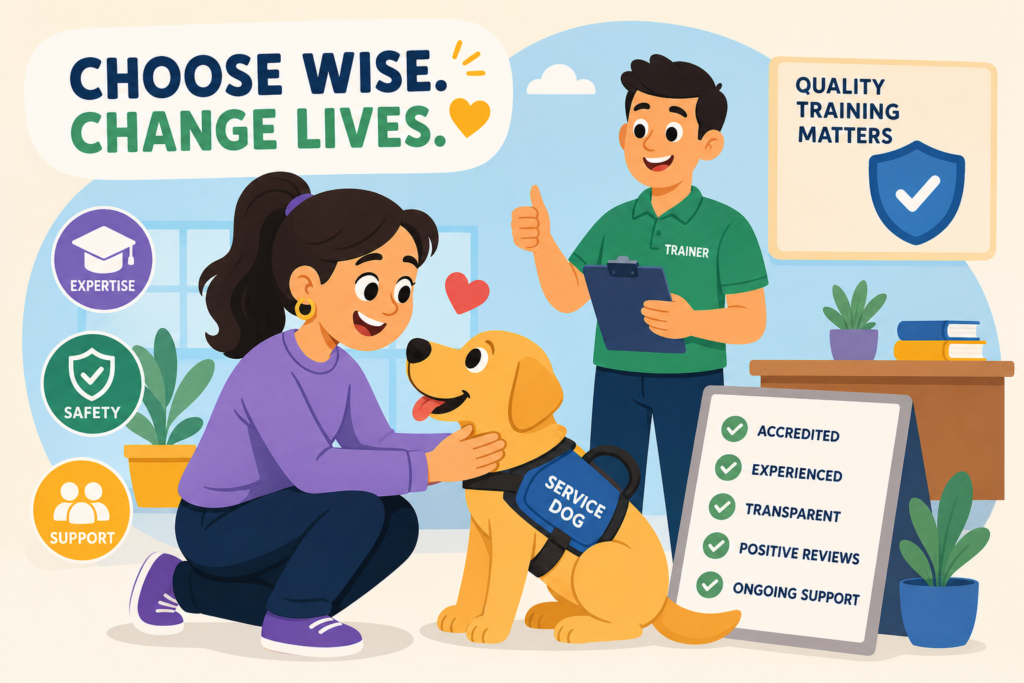
Knowing how to choose a reputable service dog training program can mean the difference between a life-changing partnership and a devastating financial loss. A fully trained service dog from a legitimate program can cost anywhere from $10,000 to $60,000, and waitlists at many non-profit programs currently stretch one to three years, with some reaching five. This guide walks you through exactly what reputable programs look like, what red flags to watch for, what questions to ask, and why owner-training is a legally recognized option worth understanding.
At Collab Dog Training, we get asked regularly whether someone should go through a formal program or train their own dog with professional guidance. The honest answer depends on the person, the dog, and the situation. So we’ve put together this breakdown to help you evaluate your options clearly before committing to anything.
What Accreditation Actually Means for a Service Dog Program
Assistance Dogs International (ADI) is the primary globally recognized accrediting body for assistance dog programs. ADI accreditation is not a one-time approval. Programs are regularly reassessed against a detailed set of standards covering humane training methods, dog health and welfare, ethical client treatment, proper screening and matching procedures, legal compliance, and post-placement support. When a program carries ADI accreditation, it has been through a peer-review process that includes an on-site survey and review by the Accreditation Review Committee, not just a paid membership application.
Trainer credentials are equally worth scrutinizing. According to the Certification Council for Professional Dog Trainers (CCPDT), certifications like CPDT-KA (Certified Professional Dog Trainer, Knowledge Assessed) require passing a standardized exam, documented training hours, and ongoing continuing education, along with adherence to humane training standards. That’s meaningfully different from titles a trainer can invent or purchase as part of a course completion package. When evaluating any program, ask specifically what credentials the trainers hold and what those credentials actually require to maintain.
A well-run, compliant program should also provide clients with documented proof of the dog’s training history, health records, and temperament evaluations before placement. There should be a formal application process, a clear matching procedure, and full disclosure of the training methods used.
If a program cannot or will not provide these, it is not operating to a legitimate standard.Contact ADI directly to verify any program’s accreditation status, as ADI does not currently maintain a publicly searchable consumer directory for this information.
How to Choose a Reputable Service Dog Training Program: Red Flags to Watch For
Registration Scams
One of the most widespread scams in the service dog industry involves selling “official” service dog IDs, vests, certificates, and online registry listings. This matters because there is no government-mandated national registry for service dogs in the United States. No certificate, vest, or registration card from a website grants a dog legal service animal status under the ADA. The FTC has issued consumer alerts about fraudulent service animal documentation schemes, and state attorneys general have pursued actions against providers selling these meaningless documents while implying they carry legal weight. Any program or provider that sells registration as proof of legitimacy is misrepresenting how service dog law works, and that’s reason enough to walk away. For recent reporting on how scammers target veterans and other vulnerable people, see coverage by consumer advocates highlighting service dog scams. For a deeper dive into how these certification schemes work and what to watch for, watch Service Dog Certification Online – Real or Scam?
Behavioral Red Flags
Behavioral red flags are equally telling. Watch for urgency around deposits, refusal to explain training methods or measurable outcomes, no client or dog screening process, and the inability to offer facility tours or verifiable references.
Legitimate programs ask a lot of questions before accepting a client, because matching a dog to a person’s specific disability, lifestyle, and environment takes real evaluation. To see what a proper temperament evaluation looks like, watch Service Dog Puppy Temperament Test. Any program willing to take your money without that process is not operating with your wellbeing as the priority.
Post-placement support is another reliable differentiator. Reputable programs invest in what happens after the dog goes home. They offer follow-up check-ins, refresher training, and clear policies for what happens if the dog develops a behavioral problem or stops reliably performing tasks. Programs that disappear after payment treat placement as a transaction, a serious problem, because service dog work requires ongoing maintenance and troubleshooting throughout the dog’s working life.
Real Costs and Timelines to Expect
When a reputable program charges $15,000 to $50,000, that price reflects years of infrastructure. Selective breeding, puppy raising, and professional training account for a significant portion. It also covers veterinary care, liability management, staff salaries, and facility overhead. It’s not primarily a fee for the final months of task training. Some ADI-accredited non-profit programs are donor-funded and provide dogs at low or no cost to the client, though travel, follow-up training, and related expenses may still apply. Understanding what drives the price helps you recognize when a low-cost offer from an unaccredited provider is a risk, not a deal.
Timelines are just as important to understand. Training a service dog typically takes six months to two years, with complex medical alert tasks or specialized psychiatric service dog work often requiring the longer end of that range. Waitlists at reputable non-profit programs add significant time on top of that. ADI data from 2026 shows over 7,600 potential clients on waitlists across member organizations worldwide, reflecting the real gap between demand and capacity. Any program promising a fully trained service dog in eight weeks is not describing a legitimate training timeline. Factor the full timeline into your planning before you apply anywhere.
How to Choose a Reputable Service Dog Training Program: Questions to Ask Before You Commit
These aren’t unusual questions to ask, and any legitimate program will answer them directly and transparently. Ask about training methods first: do they use force-free, positive reinforcement-based approaches? How do they evaluate a dog’s temperament before training begins? What specific tasks will the dog be trained to perform, and can they share placement rates, task reliability data, or client references you can actually contact? These questions establish whether the program operates with measurable accountability or relies on vague reassurances. For an organized checklist of important application questions, see resources that outline key items to ask when applying to programs, like those provided by subject-matter experts covering questions to ask when applying. For guidance on choosing the right dog for service work, watch Can ANY Dog Be a Service Dog?
Then move into placement and support questions:
How does the program match a dog to a specific person’s disability and lifestyle? What training will you receive before and after placement? What happens if the dog stops performing tasks reliably six months after you get home? Is there a return, retirement, or replacement policy, and what does that policy say in writing? A program with genuine accountability will answer all of these without hesitation. One that deflects, minimizes, or provides non-answers is showing you something important before you’ve signed anything.
Additional questions around service dog placement you can ask:
- What training methods do you use, and are they force-free?
- How do you evaluate a dog’s temperament before training begins?
- What measurable outcomes, placement rates, or client references can you provide?
- How do you match a dog to a client’s specific disability and lifestyle?
- What is your policy if the dog stops performing tasks reliably after placement?
- Is there a defined support period, and what does it include?
When Program Training Isn’t Accessible: Owner-Training Done Right
Under the ADA, there is no requirement that a service dog be trained by a professional program or certified by any organization. The ADA explicitly states that people with disabilities have the right to train the dog themselves and are not required to use a professional service dog training program. Owner-trained service dogs carry the same public access rights as program-trained dogs, provided the dog is trained to perform disability-mitigating tasks and behaves appropriately in public. When it’s not obvious a dog is a service animal, a business may ask only two questions: is the dog a service animal required because of a disability, and what work or task has the dog been trained to perform? No certification, no registration, no ID card required. For a full breakdown of which disabilities qualify under the ADA, watch What Disabilities Qualify for a Service Dog (Under the ADA)?
This is an underrecognized legal reality for many people facing $30,000 to $60,000 program costs and multi-year waitlists. Owner-training with structured professional guidance is not the same as going it alone with a YouTube playlist. A credible owner-training path includes step-by-step task training protocols built around the handler’s specific disability needs, clear public access standards, temperament evaluation, and consistent documentation habits, training logs, task records, and video evidence of task performance and public access reliability. Documentation isn’t a legal requirement under the ADA, but it creates a clear record if questions arise and holds training accountable over time. For guidance on documentation best practices and keeping a training record, see established resources on documenting service dog training. For a comprehensive overview of owner-training a service dog from start to finish, watch Service Dog Owner Training: How to Train a Service Dog Using Positive Reinforcement
Before committing to any paid program, owner-trainers can start free. Collab Dog Training offers a free 30-minute interactive class — a SmartCast — that walks through the 4-Phase Roadmap for self-training a reliable service dog, including exactly what to do when a dog works beautifully at home but falls apart in public. It’s a low-pressure way to see whether structured owner-training is the right fit before investing in a full program. Watch the free class here.
This is exactly the gap that Collab With Your Dog was built to fill. The programs cover task training protocols, public access standards, temperament assessment, and the documentation practices that keep owner-trained teams working reliably. For motivated handlers who have the right dog and want credible, step-by-step guidance without a five-figure program price tag, this is a legitimate and legally recognized path with real professional support behind it. If you’re exploring how to train their own dog with professional guidance, our Interactive Training: how to train a service dog program provides structured lessons and coach support tailored to service tasks.
Owner-training also benefits from clear pathways to demonstrate competency and preparedness. When the conversation turns to formal recognition or verification, learning more about pursuing recognized documentation and certification options can be helpful; for a deeper dive into what certification involves and how to approach it, review our guide on How to Obtain Service Dog Certification: A COMPLETE GUIDE.
Moving Forward with Clarity
Choosing a reputable service dog training program means knowing what legitimate accreditation looks like, understanding what well-run programs provide versus what disreputable ones avoid, setting realistic cost and timeline expectations, and asking direct questions before you commit a dollar or a year of your life. The industry includes real providers doing extraordinary work, and it also includes bad actors who exploit the desperation that comes with disability and limited options. The tools in this service dog training checklist-style guide exist to help you tell the difference quickly.
Owner-training is a fully legal, widely used option for people who have the right dog, the right support, and the motivation to follow through. It’s not a workaround or a compromise. For many people, it’s the most accessible path to a reliable service dog and a genuine partnership with their animal, one built on trust, consistency, and shared work from the very beginning.
Whether you’re actively comparing programs or just beginning to explore how to choose a reputable service dog training program for your situation, Collab Dog Training offers free resources, practical training guidance, and structured online courses built for exactly this. Visit CollabDogTraining.com to explore your options and take the next step with confidence.